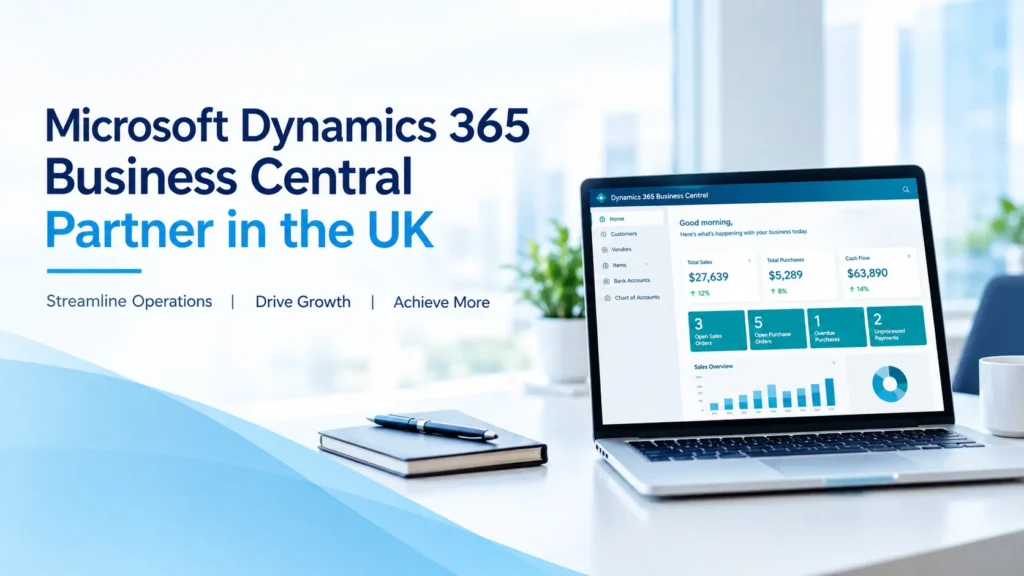
Microsoft Dynamics 365 Business Central Partner in the UK: Implementation, Migration & Support Services
Looking for a Microsoft Dynamics 365 Business Central Partner in the UK? Trident Information Systems UK helps businesses implement, migrate, customise, integrate, and support Microsoft Dynamics 365 Business Central. With 26+ years of ERP and IT consulting experience, Trident provides end-to-end Business Central services for UK organisations, from initial ERP assessment and solution design through implementation, data migration, integrations, training, go-live, and ongoing support. Trident also helps businesses running legacy Microsoft Dynamics NAV modernise their ERP environment by migrating to Dynamics 365 Business Central. Quick Answer: Who Is a Business Central Partner in the UK? A Microsoft Dynamics 365 Business Central partner in the UK is an ERP consulting and implementation company that helps businesses deploy, customise, migrate to, and support Microsoft Dynamics 365 Business Central. Trident Information Systems UK provides Business Central services, including: Trident’s UK operation is based in Manchester, supporting businesses across the United Kingdom. What Is Microsoft Dynamics 365 Business Central? Microsoft Dynamics 365 Business Central is Microsoft’s cloud-based ERP solution designed to help small and mid-sized organisations manage finance, sales, purchasing, inventory, projects, supply chain, and other core business processes in one connected system. Business Central can help organisations replace disconnected spreadsheets, legacy ERP applications, and multiple standalone business systems with an integrated business management platform. Core Business Central capabilities include: Financial Management Sales Management Purchasing Inventory Management Supply Chain Management Manufacturing Depending on the organisation’s requirements, Business Central can support: Project Management Business Central can also support: Why Do UK Businesses Choose Business Central? Businesses often consider Business Central when their existing systems are becoming difficult to manage or are no longer providing sufficient visibility. Common challenges include: Disconnected systems → duplicated data Spreadsheets → manual processes Legacy ERP → difficult upgrades Limited reporting → delayed decisions Manual finance → slower month-end Poor inventory visibility → working-capital pressure Multiple applications → integration complexity Business Central provides an opportunity to bring finance and operations onto a more connected ERP platform. For growing UK organisations, this can provide a foundation for standardisation, automation, reporting, and future expansion. Trident Information Systems UK – Business Central Partner Trident Information Systems provides Microsoft Dynamics ERP consulting and implementation services and has more than 26 years of ERP experience. Its Business Central capabilities cover the complete ERP lifecycle: Assess → Plan → Design → Implement → Migrate → Integrate → Train → Go Live → Support → Optimise This means organisations can work with Trident not only for an initial Business Central implementation but also for ongoing ERP improvement. Microsoft Dynamics 365 Business Central Services in the UK 1. Business Central Consulting Selecting and implementing an ERP system starts with understanding the business. Trident can help organisations assess: The outcome is a Business Central roadmap aligned with business priorities. 2. Business Central Implementation A successful Business Central implementation should be based on business processes rather than simply replicating an existing system. Trident’s implementation services can cover: Business Requirements: Understanding how the organisation currently operates and identifying improvement opportunities. Solution Design: Designing the Business Central solution around finance, sales, purchasing, inventory, manufacturing, projects and other requirements. Configuration: Configuring Business Central functionality according to the agreed solution design. Customisation: Developing extensions and other required functionality where standard Business Central capabilities do not meet specific requirements. Data Migration: Migrating relevant master and transactional data from legacy systems. Integration: Connecting Business Central with other business applications. Testing: Validating processes, data, and integrations before go-live. Training: Preparing finance, operations, sales, procurement, and other users. Go-Live: Supporting deployment and transition into the production environment. Post-Go-Live Support: Providing support and optimisation after implementation. 3. Microsoft Dynamics NAV to Business Central Migration One of the most important Business Central opportunities in the UK is Dynamics NAV migration. Many organisations have invested years in Microsoft Dynamics NAV, including customisations, integrations, reports, and historical data. Moving to Business Central requires more than simply transferring the database. A NAV migration should assess: Trident helps organisations assess their existing NAV environment and develop a migration strategy for moving to Dynamics 365 Business Central. NAV to Business Central migration can include: 1. NAV assessment: Review the current ERP environment. 2. Customisation assessment: Identify functionality that needs to be replaced, redesigned or retained. 3. Data assessment: Determine which data should move to Business Central. 4. Solution redesign: Identify opportunities to use standard Business Central functionality. 5. Development: Build required extensions and integrations. 6. Data migration: Move required master and historical data. 7. Testing: Validate processes, integrations, and migrated data. 8. Training: Prepare users for the new Business Central environment. 9. Go-Live: Transition operations to Business Central. 10. Support: Provide post-migration assistance and optimisation. 4. Business Central Upgrade Services Businesses already using Business Central may need help with: Trident can help organisations maintain and modernise their Business Central environment as their business requirements evolve. 5. Business Central Customisation Every organisation has unique processes. However, excessive ERP customisation can make future upgrades expensive and complicated. Trident’s approach can focus on using standard Business Central functionality wherever practical, while developing extensions where a genuine business requirement exists. Customisation can include: The objective is to create a Business Central solution that fits the organisation without creating unnecessary technical complexity. 6. Business Central Integration Business Central often needs to exchange information with other applications. Trident can help integrate Business Central with systems such as Integration can help reduce duplicate data entry and create a more connected operational environment. 7. Business Central Support in the UK Going live with Business Central does not mean the ERP project is finished. Users may need support with: Trident provides Business Central support and managed services for organisations that require ongoing ERP expertise. Support models can be structured around the organisation’s requirements, including dedicated, shared, and incident-based support. 8. Business Central Managed Services A Business Central managed service model can provide organisations with ongoing access to ERP expertise without building a large internal Dynamics team. A managed service can include: This is particularly useful for businesses that have Business Central in production but